

Hey.
The number of the day: 473,600.
Not a valuation. Not a follower count. Not a token budget.
That is the number of generations behind The Cully Hill Boys, a feature-length AI action comedy that premiered at The Glasshouse in New York on 5 August. Two hours of three London rappers finding £2M of blood money inside a boat hull. Every frame generated. No sets, no cameras, no lighting rigs.
One fight in the whole film touched physical reality: stunt performers, filmed on a phone, used only as a motion reference.
Open the project folders and the invoice reads like a war ledger:
Act One: 146,471 generations
Act Two: 140,693
Act Three: 125,007
Epilogue: 25,918
Pre-production alone: 34,388
Roughly 70 generations for every single second you see on screen.
Just imagine THE insane amount of work. Try to comprehend it.
Their previous film, Hell Grind, screened at Cannes and took about 120,000 generations. This one took four times that. The budget was $2 million, and roughly half of it went to compute. A 28-person team, nine directors, four weeks of production, and 40 percent of the crew had never touched AI before.
Then they open-sourced the entire thing: every prompt, every asset, public. The full canvas is browsable right now, 600 approved assets sitting next to the versions that did not make it.
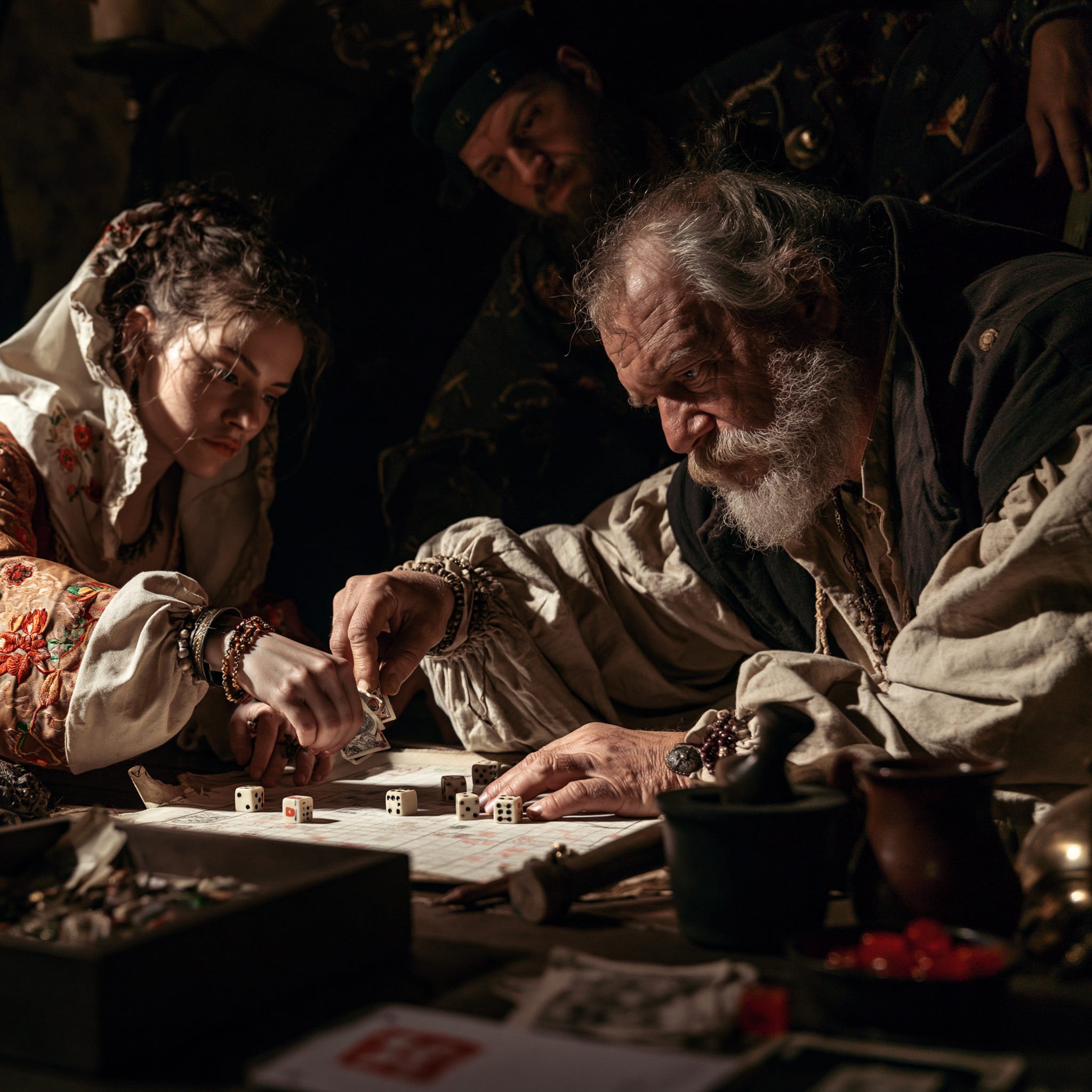
I spent this week inside the production brief. It does not read like filmmaking. It reads like legislation.
You don’t direct a model. You legislate it.
Four films, one staircase
Cully Hill did not appear from nowhere. It is one step on a staircase the same studio has been climbing in public all year, and each step teaches something different.
Hell Grind, the discovery. The one that went to Cannes in May: four street thieves, a failed heist, a portal to the underworld, directed by Aitore Zholdaskali. 95 minutes, built in 14 days for about $500K, roughly 120,000 generations, and the rules found on the way. Four of those rules survived and became the inheritance: every shot opens with its dramatic context; frame one is already occupied, no empty establishing beat; one second of silence after every line so the editor gets a seam; the face and the body written beat by beat instead of an adjective.
And one human receipt hiding in the coverage: the director had spent a decade getting his first traditional feature made, then landed at Cannes with an AI feature months after his Rotterdam debut. Ten years of path, compressed into one season. The full film is free and open-sourced too.
The Cully Hill Boys, the industry. The rules waiting on day one, licensed likenesses, nine directors working in parallel, 473,600 generations. Everything below stands on its brief.
Adiliada, the frontier. A pitch-black sci-fi comedy: Adil stumbles into an impossible power, every death reboots him into a new universe as an alternate version of himself, and he hops from world to world trying to stop the end of them all.
Now read that premise again as a producer, because it is the overlooked joke of the whole trilogy.
The hero dies and returns as an alternate version of himself. That is the plot of Adiliada, and it is what a video model does to your character in every shot.
The premise is the pipeline confessing. One identity across many worlds is the consistency problem pushed to its logical extreme, and the studio has already published the full prompt library of its Adil short film, which the sections below borrow from.
Oneiric, the invitation. The newest step, out this week: a 20-minute sci-fi drama subtitled “Where Dreams Render”, 100% AI, fully open-sourced, made on the new Cinema Studio 4, and streaming free on the platform.
It exists for one reason: it is the studio’s own reference entry for its $1,000,000 Global Film Festival, open to anyone, submissions closing 3 September. I will definitely submit something from me and my team to compete. This is an amazing opportunity.
And look at how the platform sells the credits to enter: “More credits mean more attempts, a better film.”
That is not marketing copy. That is the Probability Tax printed on a pricing page. The attempt is now the unit of quality, and the people selling the shovels are the first to say it out loud.
The crew didn’t disappear. It became text
Everyone is busy arguing whether AI kills film jobs. Here is what almost nobody noticed on this production: the jobs didn’t vanish. They were relocated into language.
The continuity supervisor became a descriptor. Every character exists as a paragraph pasted into every prompt word for word, never shortened, not even a synonym swapped. Widen the wording, and the face or the voice drifts into someone else.
The script supervisor became a spatial map. A floor plan written in prose, pasted unchanged into every shot of a scene, because meters mean nothing to a model and “left of the hero” means less than nothing.
The cinematographer became an OPTICS block written in degrees off a ladder of ten anchors. One lens per shot, or the model slides back to a comfortable middle.
The acting coach became physics. The words “sad” and “jealous” appear nowhere in 137 scenes. Instead: a clenched jaw, one nostril flare, a lazy blink followed by a hard reset-blink.
The director became a legislator. The prompt library holds about 150 named locks, and roughly eighty sentences end in “= failed take”.
A camera crew you direct. A probabilistic machine you govern. Which brings us to the cost of governing it.
The Probability Tax
Every interaction with AI is a dice roll. I built a whole edition on that sentence in Success with AI is Probabilistic.
Success with AI is Probabilistic and Not Deterministic

I watched my friend founder blow $50,000 on AI tools last month.
The Cully Hill Boys is that sentence handed a $2 million budget, and it finally gives the cost a name.
The Probability Tax: the price you pay, in retries, to extract a deterministic artifact from a probabilistic machine.
A film must show the same person, in the same room, lit by the same sun, 1,500 clips in a row. The model resets to zero every single time. The gap between those two facts is the tax, and on this film the bill came to 473,600.
You cannot abolish the tax. You can only lower the rate. The entire brief is, in essence, six deductions:
Assets first. The model has no memory, so you build the film’s memory outside it. 600 locked assets, each stress-tested in motion, ten generations out of ten, before a single scene was shot. Cal soaked from the Thames is a separate asset from Cal dry. Day, night and rain are three locations, not one.
Describe everything, every time. The descriptor travels verbatim into every prompt. Trimming it to save tokens is how your hero becomes a stranger by shot three.
One change per iteration, everything into the log. 137 entries: version, what changed, verdict. Without the log you cannot repeat a good shot, and you cannot tell whether you already tried this fix.
Delete freedom. A corner instead of a room. A landmark instead of open space. One lens per shot, one action per beat. Every option you remove is tax you don’t pay.
Write law, not requests. A rule counts only when it has a name, visible proof in the frame, and a sentence defining the broken shot.
After 15 to 20 failures, change the shot, not the wording. Every failing shot they saved was saved by simplifying it. Not one was saved by a better sentence.
Reread that list as an operator, because you are already living it. The verbatim descriptor is your CLAUDE.md. The spatial map is your architecture doc. The stress test is your eval suite. The log is your commit history. It is the exact discipline that keeps a swarm of sub-agents from drifting overnight.
If your agent’s context file is vibes, you are paying the top marginal rate of the Probability Tax.
What law actually looks like
Five artifacts from the prompt libraries of these films, and the lesson each one carries.
Bans are invitations. There is no negative block anywhere in the fifteen-block skeleton, because a model treats “does NOT fall on his back” as an invitation to think hard about falling on his back. Every prohibition is rewritten as the desired outcome: “falls on his stomach”. And when a tone must be a tone, it gets clamped from both sides so it cannot collapse into caricature:
between joy and aggression; a rage-twisted face = failed take;
a soft beaming smile = failed take; deadpan = failed take.
Voice is a contract, not a casting choice. No cloning, no re-recording. A voice is a block of written conditions pasted verbatim into every scene, accent included as phonetics, never as a label:
CAL, voice: “A 25-year-old English man. Smooth, relaxed mid-range baritone;
casual, unscripted, conversational delivery; South London street accent:
dropped h’s, glottal t, -ing to -in’; nostalgic and warmly reflective.”
Geography is a compass, written once per scene:
Compass for this scene: the WINDOW WALL is the camera side (all coverage
shoots from the window side, the 180-degree line is never crossed); the
STAGE is deep frame-RIGHT. CAL stands at the second chair row, arm’s
length from the aisle; OLI at the stage edge, one long stride from the
EXIT door. EXACTLY THREE people, nobody else, the hall otherwise empty.
Even absence gets legislated. My favorite shot in the library has Oli kicking a door open entirely off-screen, and his non-existence is written as law:
(OLI: OFF-SCREEN ONLY, no reference loaded: he is NEVER visible, not a
limb, not a shoulder, not a shadow, not a reflection; his two failed
kicks happen strictly BEHIND THE CAMERA, UNSEEN and SILENT.)
The whole gag plays on two faces reacting in the same second, and an invisible man.
Realism is written as flaws. This one comes from the Adiliada short library, and it is the inversion nobody expects. To make a shot look real you do not ask for “photorealistic, 8K”. You describe the defects of a real cheap camera. Their patrol-car scenes are prompted as dashcam footage, defect by defect, down to the compression artifacts. My reusable rebuild of the stack:
DVR REALISM STACK (append to any surveillance or found-footage shot):
flat consumer sensor, faded colour, crushed dynamic range, light
compression artifacts, faint digital noise, gently clipped highlights,
cheap wide-angle lens distortion, ungraded raw look, no on-screen text.
Perfection reads as CGI. Defects read as a camera that exists.
Jevons, but for pixels
Here is the twist I did not expect. Hell Grind was made in 14 days for half a million dollars while discovering the rules on the way: 120,000 generations. Cully Hill had the rules waiting on day one, a stronger Seedance underneath (the studio says the film shipped on 2.5), and a reference budget of nine images, three video clips, and three audio files per generation. The bill should have dropped.
It quadrupled.
This is Jevons paradox arriving in pixels. When coal engines got efficient, England burned more coal, not less. When intelligence gets cheap, it gets spent, not saved. Efficiency didn’t shrink the work on this film. It financed the ambition: more characters, more locations, lip-synced rap performances, a train finale.
Better models don’t reduce the work. They raise the ambition.
So no, the next film will not cost 50,000 generations. It will cost a million, and it will be worth it.
The moat moved from cameras to contracts
The cast is real and never stood in front of a camera. Israel Adesanya, Rampage Jackson, N3on, Matt Kiatipis: their likenesses were digitized from contract photography, and the rights were closed before production, with source assets deleted within 30 days of wrap. The paperwork shipped before the pixels did.
Now the confession. I have my own film slate in a note somewhere. The Witcher. Warhammer. An Odyssey retelling. For years, the honest blocker was production: crews, sets, a hundred million dollars I was not going to spend. Somewhere in the last twelve months that blocker quietly died, and a new one took its seat. The technology no longer stops me. The license does.
That is the flip most people are missing. When anyone can render a world, owning the world becomes the entire business. Disney understood this first: a $1 billion investment in OpenAI and a three-year licence putting more than 200 characters into Sora, on Disney’s terms, with talent likenesses explicitly carved out. The studios everyone declared dead are holding the one asset a video model cannot generate: permission.
Steal this skeleton
This is my working template for a 30-second Seedance generation, ten blocks, built on the Cully Hill method. FORMAT sits first because duration and cut count must be the first thing the model reads. AUDIO exists because an undeclared soundtrack means the model invents one.
